
Ticketmaster Won. Everyone Else Lost. That’s Why Tickets are Broken.

Hi!
This is a longer piece that I’ve been working on for a few days…
Consider this my collected thoughts about tickets heading into 2026.
If you like this one, share it!
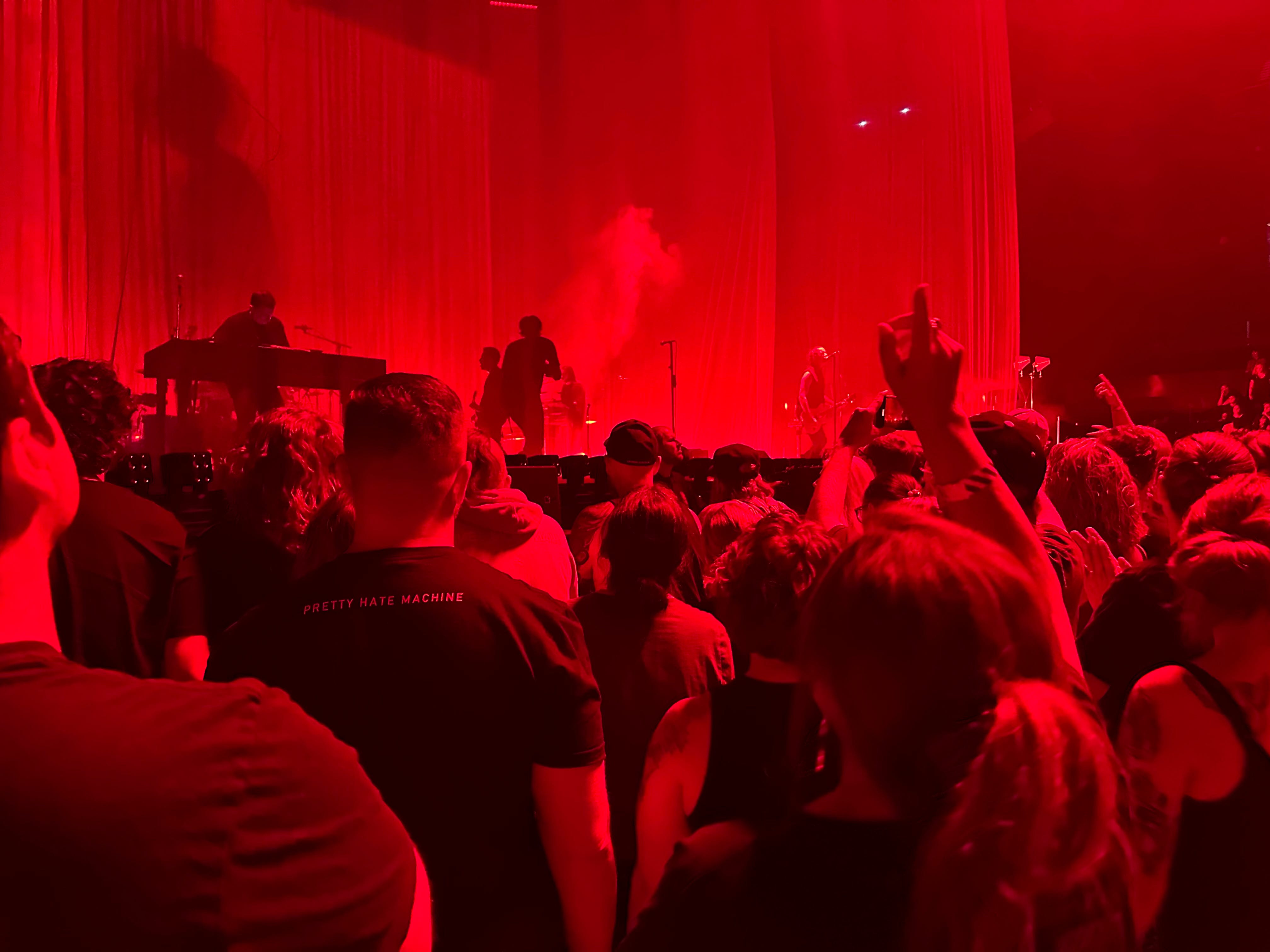
I started this piece thinking that everyone had lost.
The ticket ecosystem was broken.
No one was coming out ahead.
I was wrong.
Ticketmaster won. Live Nation won.
The executives who built an extraction machine won.
Private equity firms that have treated tickets as financial instruments won.
The shareholders who demanded more yield, more margin, and more “efficiency” won.
They won big!
They won so big that Live Nation saw record revenues, while fans screamed into the void.
They won so big that executives cashed out while customers vowed to never return.
But it wasn’t just winning at the expense of fans.
Artists lost.
Not because they can’t set their own prices.
They can.
In theory, artists can decide the price of their tickets.
But that number is increasingly meaningless.
Live Nation owns the venues.
Live Nation owns the promotion.
Live Nation owns the ticketing.
Live Nation owns the concessions.
Live Nation owns the parking.
To fans, these are just line items.
A $15 beer here.
A $25 parking pass there.
Even with “all-in” pricing, the $5 facility fee and the $8 processing fee are rolled into the total price.
Each one is a cost of going out.
Together, it is a machine.
By the time the artist’s price gets through all these layers, what’s left bears little resemblance to what the fan paid.
The artist gets their cut of the ticket price, but the machine takes much of everything else.
Fans throw up their hands.
They give up.
Fans may blame the “greedy” artist.
Fans may blame Ticketmaster.
But more than anything, they look at the total number and say, “This is too much. I’m out.”
The pain is ambient.
The vague sense of “everything is expensive” and “going out isn’t worth it” penetrates every decision.
This is worse for the artists.
If the fans were mad at the artists, they could defend themselves.
Justify their pricing.
Try to win fans back.
But once fans have checked out, shrugged, and moved on?
There’s no one to persuade.
These fans are just…poof, gone.
Artists can’t say no, because where else are they going to play?
Venues lost.
Independent venues that once thrived on local music have been undermined by exclusive deals. These deals are often the only way to access major acts.
These deals compressed venues’ margins.
These deals helped undermine venues’ identities.
Venues have turned into stops in a pipeline, not destinations with personality and history.
Independent promoters lost.
Mid-sized players who used to discover talent and build scenes?
Pushed out.
They can’t compete.
Not a dramatic takeover.
Death by a thousand cuts.
The box office is still there, but box office culture is gone.
People want convenience, even when it costs them more and feeds the machine.
Reaching potential ticket buyers is more difficult.
You must play the paid attention game.
Meta. Google. TikTok.
Everyone takes a cut.
This is a monopoly tax.
Not just to Live Nation, but to every ad network that sits between you and the customer.
If you happen to do everything right?
You are still boxed out by the volume of noise in a world where everything is an ad network. And attention is the scarcest resource.
Local music scenes have lost.
When every show in every city runs through the same machine, everything starts to feel the same.
Same fees.
Same interface.
Similar sterile environments.
The texture disappears.
That little moment that made a Tuesday night show at a grimy club feel special is gone.
It doesn’t scale.
Scale is all the machine wants.
So no, not everyone lost.
A few people won… spectacularly.
Their victory is exactly why the ticket-buying experience feels like a hostage negotiation.
And, why your favorite team and artist feel further away than ever before.
Let’s go deeper.
The Good, The Bad, and The Ugly of The Secondary Market
Let’s be fair to the secondary market.
Really fair.
It isn’t all bad.
It certainly isn’t all good.
The good: Competition is healthy.
Fans should have options.
Fans should have liquidity when plans change.
A functioning secondary market is a sign of a healthy primary market.
Real proof that demand exists, that tickets have value.
The bad: Exclusive deals between teams, venues, artists, and Ticketmaster strangle competition.
When the primary market is monopolized, the secondary market becomes a pressure valve and a chaos agent.
Prices swing wildly.
Trust erodes.
Fans can’t tell what anything is “worth.”
Relationships and innovation are discarded ideas.
The ugly: In the absence of real relationships, everyone has optimized for their own benefit.
Teams, artists, and venues sold tickets in bulk to brokers.
Brokers sold to whoever would pay the most.
Platforms took their cut, no questions asked.
Fans learned to treat the ticket and the experience like a commodity because everyone else already did.
This isn’t really a story about good versus bad.
It is a story about incentives beating intentions.
Follow the incentives.
All those sky-high prices on StubHub, Vivid Seats, or somewhere else?
This is a result of the incentives.
If teams, artists, venues, and shows had spent decades building real relationships with fans, what would the secondary market look like?
Fans would buy direct more often.
Fans would trust the primary seller and know where to go.
Fans would feel loyalty to the team and artist, not the platform.
The secondary market would be what it claims to be: a place for plans to change, not a primary point of purchase.
That’s not what happened.
Instead, teams sold to brokers because it was easy revenue.
Artists looked the other way because they wanted those high tour grosses.
Venues signed exclusive deals because the incentives were too good to pass up.
All the incentives said: Take the money now. Fans will buy no matter what.
Now?
Brokers gouge because they have no other way to win.
The platforms have no customer loyalty.
Brokers are anonymous accounts on the internet with no customers.
Neither has fans who wake up thinking about them.
They have inventory.
They have algorithms.
And, often, a willingness to wait until the last minute to see who blinks first.
When you have no brand loyalty, no emotional connection, and no reason for someone to pick you except price…what’s your only play?
Price.
Fees.
More price.
More fees.
A lot of the secondary market’s “bad behavior” is driven by a market that outsourced its relationships for so long that fans learned to treat tickets as commodities.
The primary market could stop some of this.
They have the data.
They see the bots.
They know which accounts are brokers buying in bulk.
They could make it more difficult for brokers to harvest tickets.
They don’t.
Why?
Follow the incentives.
Every bot purchase generates a fee.
Every resale transaction generates a fee.
Every time a ticket is sold and resold multiple times, fees.
A fan buys a ticket.
That’s only one fee.
If the seat goes unused?
So what?
Empty seats don’t cost them anything.
The transaction already happened.
The fee already cleared.
The machine already won.
Bad behavior pays.
Why would anyone stop it?
This is the game.
Little or no brand investment.
No focus on relationships.
Selling consistently, year after year, took a backseat to “maximizing” every transaction.
A more fan-friendly ecosystem would have meant leaving money on the table.
Brokers aren’t blameless.
They are playing the game they were given.
You can’t just blame the brokers for being better at the game that has been set up.
Instead, ask, “Why did we create this system to begin with?”
And, “Who benefits from things staying the same?”
The Real Problem: The Relationship with the fan is broken.
The relationship between ticket sellers and ticket buyers is fundamentally broken.
It isn’t just high fees. They don’t help.
It isn’t just monopoly control. That’s just an enabler.
It’s a broken system because no one in the chain has been incentivized to create fans.
Think about it.
Live Nation has been measured on market share and margin. Not ease of use or fan satisfaction.
Teams often measure themselves based on tickets sold, per cap, and not whether fans feel valued.
Artists have measured tour grosses. Not whether their fans feel exploited.
Venues are measuring booking fees and not contribution to the community.
Brokers are measuring arbitrage and profit margins, not customer loyalty.
Secondary market platforms are measured on transaction volume. Never on long-term relationships and customer retention.
Who is measuring what matters to the fan?
Who pays attention to whether a fan feels connected? Valued?
No one.
The exceptions, such as the Twins’ new $2 beers and $2 hot dogs on Fridays and Saturdays, are the exceptions that prove the rule.
The fan slipped out of the equation because the fan didn’t need to be in the conversation.
When control is tight, you don’t have to worry about people liking you.
You only worry about whether they buy.
And, for years, fans bought.
Because the alternative was missing out.
Now, fans are starting to choose not buying.
The Competition Paradox
You might think, “This is why we need more competition. Break up the monopoly. Let fans choose where they buy.”
I agree.
To an extent.
Exclusive deals do choke off competition.
Fans would benefit from more choice at the primary point of sale.
But here’s the rub.
More competition alone doesn’t fix the relationship problem.
Want some examples of this outside of entertainment?
Look at airlines.
Competition happens.
How about hotels?
Endless choice?
Commoditized more than ever.
Amazon?
Maximum selection.
Minimum connection.
Competition helps.
Competition gives fans options.
It doesn’t give people a connection.
It doesn’t make them feel seen.
It doesn’t establish trust.
That’s why the problem alone isn’t monopoly.
It is a years-long failure to treat fans as anything other than a wallet.
You can have a dozen companies competing for your business, but if all of them treat you like a transaction, the equation is still the same.
Everyone still loses.
The “Free Market” Fallacy
Free Market true believers have a specific argument.
“Let the free market work.”
Sounds reasonable.
But it’s nonsense…for two reasons.
One, a free market requires freedom to enter.
In tickets, that doesn’t exist.
Teams and venues sign exclusive, long-term deals.
Why?
Not because of giving fans the best option.
Because of incentives and inducements that make it financially painful to choose a different path.
This isn’t a market where you can just “build a better mousetrap.”
This is a market where the exclusive deal limits access and hands control to the ticket technology partner.
Two, markets aren’t natural.
They are political.
The “free market” argument is built on the idea that markets exist in a state of nature like gravity.
They don’t.
Markets are built on rules.
Rules about who can compete.
Rules about what can and can’t be done.
Rules about fees, disclosures, and consumer protections.
Rules, stated or implied, about who gets bailed out and who gets left behind.
People write these rules.
People with power.
And the people with power tend to write the rules in a way that benefits other people with power.
American government has selectively enforced guardrails for years. That doesn’t change with the party in power.
What do we see currently?
Unlikely if the target has the right connections.
Consumer protection?
Only if it plays politically.
Structural reform?
Not when the status quo rewards the right people.
This isn’t cynicism.
It is observation.
The political will to constrain Live Nation’s power in the ticket market doesn’t exist today.
It may be years before it exists again.
So, the “free market” solution is impossible because it is conceptually wrong.
The market we have isn’t “free” because no market is truly “free.”
The market we do have is constructed to protect the interests of the companies that helped build it.
A primary seller should have the right to distribute their tickets in the way that works best for them.
That’s Marketing 101.
The challenge is that there often isn’t a choice.
The choice was made years ago.
Technology deals that run for years with economic incentives that make switching impossible.
A political system that would change that dynamic?
It has other priorities.
This isn’t a market.
It is a trap.
The Seeds of Future Defeat
This is where Ticketmaster’s win gets interesting.
What did they win?
They won market share.
They won margin.
They won the ability to extract fees from nearly every major live event in the country.
Yay! Shareholder value!
They also won something else.
They won the undivided attention of every frustrated fan, every artist who can’t reach their own audience, every venue owner who lost an identity, every journalist looking for a villain, and every regulator who someday will have the courage to act.
They won a brand that is an easy go-to example of the dangers of monopoly power.
They won a customer base that would switch in a second if offered a viable option.
The Germans have a great term, Selbstverschuldung: a victory that carries the seed of its own defeat.
Is Ticketmaster’s dominance and the state of the ticket market a victory if fans have begun to stay home?
Is it a victory if fans are so priced out that they wait until the last minute to buy tickets because they’ve been taught: #PaysToWait?
Is extracting maximum value a win if there is nothing left to build on tomorrow?
Look at what happened to restaurants.
For decades, restaurants ran their own pickup and delivery.
A customer called the restaurant.
The restaurant built a relationship with the customer.
Might know your favorite order. Send you comps, coupons.
The relationship was direct.
Then DoorDash arrived.
It seemed like a good idea at the time.
Especially during COVID, when delivery was the only way many restaurants managed to survive.
But where are restaurants now?
· DoorDash charges businesses 30% of every order.
· A restaurant doesn’t know its customer.
· The restaurant doesn’t know why you picked them.
The customer may even believe they are being loyal to a local restaurant.
But they are just loyal to the app’s interface.
If the restaurant wants to go direct?
They are now fighting the muscle memory of ordering from DoorDash.
The middleman won.
The restaurant lost.
The relationship dissolved.
That’s what “winning” looks like for the middleman.
Capture the transaction. Capture the data.
Loyalty evaporates because most people look at the middleman as a means to an end.
Restaurants have learned the lesson.
The middleman isn’t a partner.
The middleman is the taxman.
In the near term, that’s a victory.
But a victory built on resentment.
Which isn’t victory at all.
Because fans can say no.
They’ve started to use this power more consistently.
Not Just a Ticketing Problem
If you aren’t in entertainment and sports, you might think: “This sounds familiar.”
It should.
Retail trained customers to wait for sales.
When was the last time you bought anything at J. Crew for full price?
Airlines turned loyalty into a math problem.
Frequent flyers are lab rats trying to figure out redemption values, not loyal customers.
(I have a guy called Cam who does all of my travel redemption.)
SaaS optimized for acquisition, not retention.
Now churn is a crisis. “Growth at all costs” looks like a huge mistake.
Every industry that optimized for extraction over relationships is now staring at the same question:
What do you do when you’ve taken everything there is to take, and your customers aren’t going to take it anymore?
The answer isn’t pleasant.
You can’t extract your way out of an extraction problem.
You have to build something new.
That takes time.
It takes patience.
And a willingness to care about people over the next quarterly earnings report.
Rebuilding Relationships
Is there a fix?
Sure.
It won’t be a new pricing algorithm.
Not another merger.
No platform will solve this one.
Here’s where to start:
Design for the Fan, Not Just the P&L
Every decision should be tested against one question:
How will this make the fan feel valued?
If the answer is no, the short-term revenue might look good, but you are trading short-term wins for long-term losses.
Admit That Trust is a Scarce Resource
You can’t buy trust.
Trust is built slowly, purchase by purchase, with connection and humanity.
The entertainment industry is optimized at every touchpoint.
Every “dynamically priced” surge.
Every “pays to wait” moment.
Every difficult and painful on sale.
The fan felt like the teams, artists, and venues weren’t on their side.
They were right.
That’s trust-destroying.
Focus on Every Moment, Before and After
Too many folks have forgotten: the transaction is the least interesting part of the experience.
Or it should be.
Too often, the ticket-buying experience is exciting and interesting for all the wrong reasons.
Instead focus here:
The weeks before the game.
The days before a show.
Building anticipation.
Planning.
The ritual of your clothes, who you are going with, and how you’ll get there.
What about after?
Memories.
Videos and pictures.
The yearning for the next game or show.
No one owns those moments.
They are a space that could be used to build those relationships with fans.
These moments are where value can be created, connections deepened.
The ticket is just the key that unlocks the door to the fan’s heart.
Make Loyalty Make Sense
Loyalty programs should create loyalty.
Instead, they have started to create point-chasers.
Real loyalty is built on the connection between your team, your band, your organization, and fans.
You want fans to feel like their loyalty pays off in:
· Pricing that rewards consistency.
· Access that is meaningful and not just transactional.
· Communications that feel personal.
· Problems solved by people, not chatbots.
It’s harder. It is slower.
It is more expensive in the short term.
But it is the only thing that truly lasts.
Ask Yourself: What Kind of Win Are You Building?
This is the key question.
Are you creating an environment to win “Fans for Life.”
Are we winning in a way that leaves a foundation for winning tomorrow?
The victories that are on display now were built on captive customers, hidden fees, and zero loyalty.
These aren’t really wins.
They are withdrawals from a rapidly dwindling bank account.
Sure, Ticketmaster won.
For a while, brokers, secondary platforms, and teams won.
The victory’s foundation is shaky.
Because winning by extraction isn’t the same as winning due to choice.
Fans haven’t disappeared.
The fans didn’t decide that streaming at home is better than being in the building…at least not exclusively.
The fans decided that when an experience is built on extraction and commoditization, there are better alternatives.
So, fans are waiting.
Waiting for something better.
Waiting for something worth the time and money to attend.
Waiting for a connection.
Millions of people are out there.
Ready to come back.
But they aren’t coming back for another experience built on an algorithm’s idea of fun.
They aren’t coming back because of a slightly lower fee.
They aren’t coming back due to a flash sale.
They’ll come back when someone in the broken ecosystem starts remembering that fans are people, not just transactions.
Then, starts acting like it.
Join us in the Talking Tickets Slack Channel.
The podcast: all the episodes!
Send me your questions, podcast guest suggestions, and other stuff by hitting reply.
I love your content, and I ask this with sincerity. Have you considered writing in a format with paragraphs. Reading everything as a bulleted list is really choppy and has no flow. Just curious if this is a creative choice you've made?